Adaptive Software
Contents
A while back I wrote about the death of SaaS. The short version: when the marginal cost of software goes to zero, selling tool subscriptions stops making sense. The firms that win sell the work, not the tool.
That post was about the business model. This one is about the shape of the product.
#Two broken defaults
If you want custom software today you have two options, and both are bad.
Buy SaaS. You get a polished product that fits 70% of your business. The other 30% bends you to the software's shape. You pay every year, forever, for something you'll never own and can't reshape when the business changes.
Or build with one of the new generative tools. Lovable, Replit, Manus, Bolt. You type what you want into a box and it writes the app. In theory you can build anything. In practice, most businesses can't.
We found this out the hard way. At Voltade we spent a few months on an internal product called Studio, a Lovable-style blank-canvas app builder pointed at business software. Our bet was that SMEs would use it to build whatever they needed.
They didn't. Not much pickup at all. Which forced us to look at why.
#The cold start problem
A mature business has ten years of process. Staff who know the rules by reflex. Customers who've been trained to expect certain things. Put a blank text box in front of the owner and ask them to describe the app they want, and something breaks.
They can't do it. Not because they aren't smart. Because the prompt is wrong. They don't know what they want in the abstract. They know what's broken about what they already have. They know the ten minutes of copy-paste that happens every morning. They know the one thing about their invoicing that Xero can't do.
"Describe your app" is a blank-page problem. "Fix this one thing about what's already running" is not.
Mainstream SMEs need a live demo. Something that already looks like their business, running with their data. Then they can point at a button and say "this should be a dropdown". They can point at a screen and say "add a column for deposit amount". That, they can do.
#Adaptive software
The bet we're making now is what we're calling adaptive software. It has three parts.
First, ship an 80% ready vertical template. Not a generic CRM. A product that already looks like a beauty clinic on day one, or a bakery, or a childcare centre.
Second, give the business an adaptive layer on top. A widget they open and talk to. "Add a reminder two days before each appointment." "Flag orders over $200 for manager approval." "Make this column red when the deposit hasn't landed."
Third, the AI edits the product. Not a report, not a dashboard skin. The actual live app.
When the business says "no, you got that wrong, it should work like this", the system remembers and the next edit is better. A year in, the product is shaped around that specific business in a way no packaged SaaS ever could be.
#A real example
One of our customers runs a custom cake bakery in Singapore. Orders come in through WhatsApp. Custom specs like colours, designs and sizes get collected in free text. Delivery routes have to be planned every morning. Deposits have to be chased. Maybe a dozen exceptions a day get escalated to a manager in the Philippines.
No off-the-shelf CRM handles that. A generic CRM that they could configure themselves would require them to stop baking for a week to configure it, which they won't do, because Mother's Day is coming.
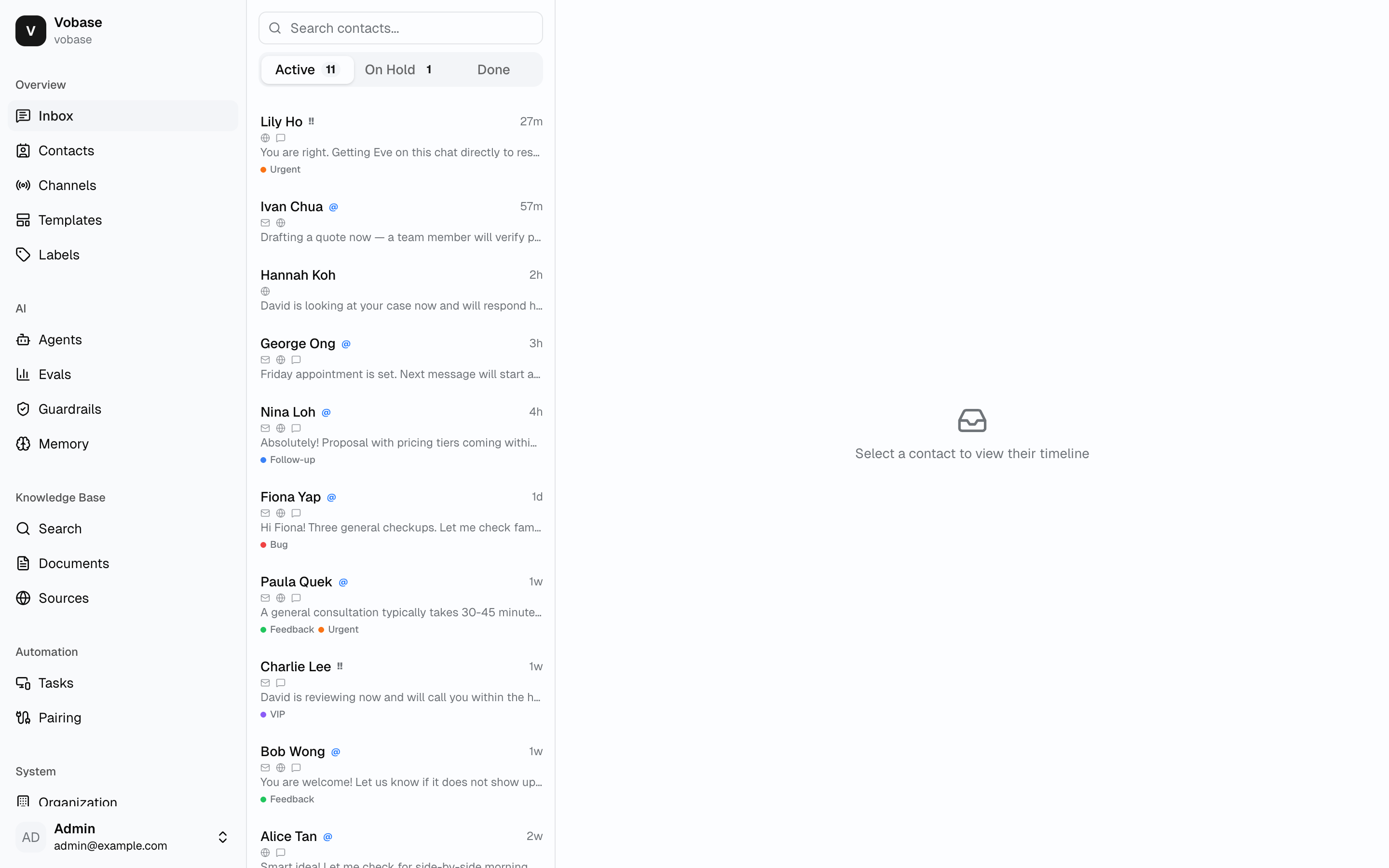
What we can give them is a version of our CRM that already knows cakes. Orders have a custom spec field. Routes get planned from the order list. Payment screenshots get matched to orders automatically. Then the owner can point at any of it and say "also, when the order is over 40 pieces, flag it for manual review". One sentence. They'd never have written that rule from scratch.
#The substrate
Adaptive software doesn't fall out of the sky. It needs a foundation that:
- Ships clean, opinionated defaults so the 80% works out of the box.
- Lets an AI coding agent read the whole codebase, understand the conventions, and safely edit the app.
- Keeps the business owning every line of code, so the customisation doesn't vanish if the vendor disappears.
We built an open source framework for this called vobase. Bun, Hono, Drizzle, Postgres, better-auth, React. Nothing exotic. The structure is the interesting bit: every module is a self-contained directory with schema, handlers, jobs and pages all in one place. No plugins, no marketplace, no hidden magic. An AI agent can read a module, understand it, and ship a working change without knocking the rest of the app over.
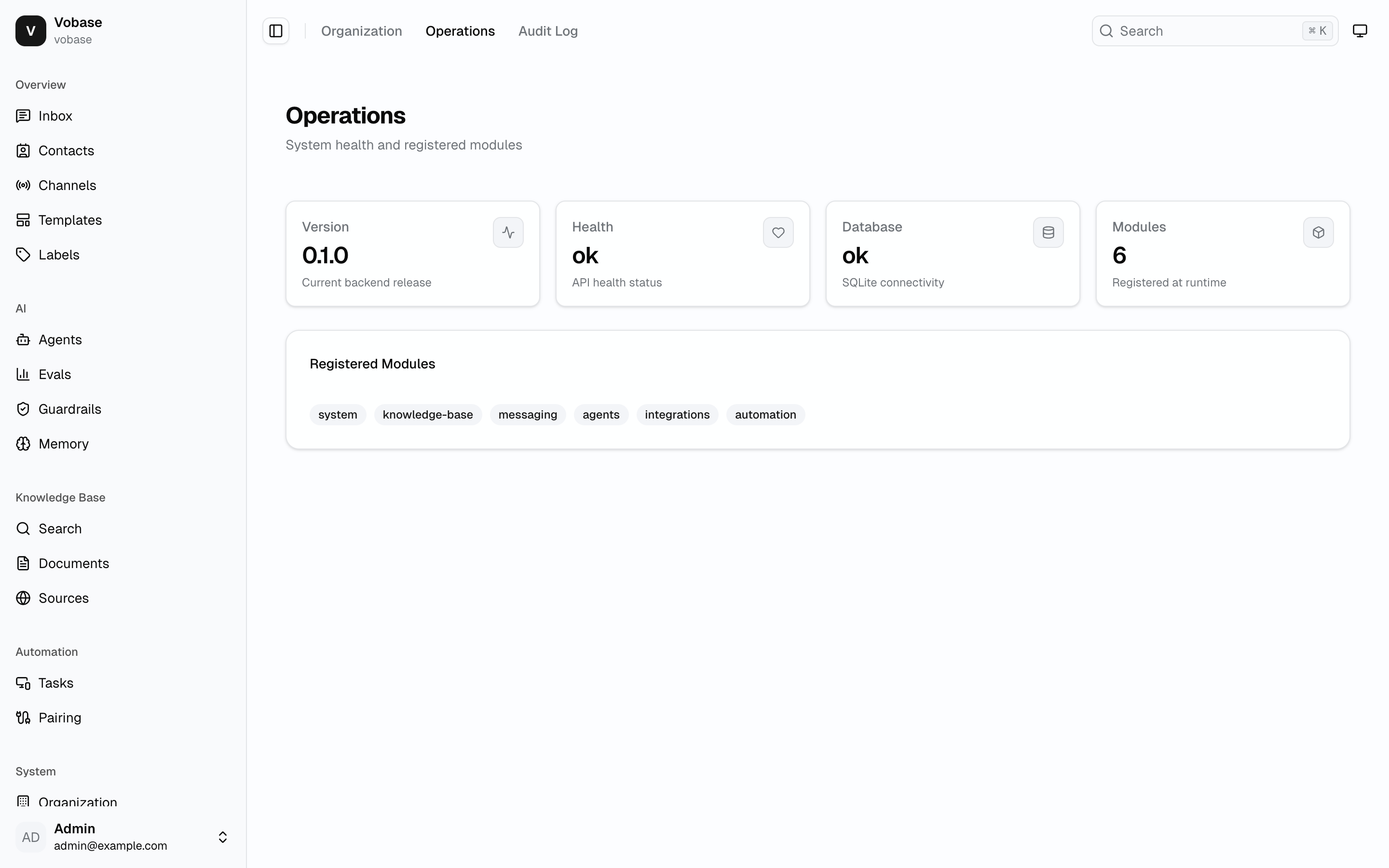
Traditional SaaS hides the code entirely. Lovable generates fresh code on every prompt with no continuity. vobase sits in the middle. The product has real structure. The agent edits that structure. The business keeps the result.
#Why this wins
Adaptive software captures three things at once.
From SaaS it keeps the polished starting point. An SME owner does not want to see a blank screen. They want to see their business running.
From generative tools it keeps the principle that software should bend to the business, not the other way around. Every weird requirement has a place to land.
From neither: the customisation compounds. Every tweak gets remembered. Every correction makes the next one better. A year later the product is uniquely theirs, and they can't easily leave, not because of contracts but because of fit.
The business model that falls out of this is also different. You're not selling a subscription to a tool. You're selling a product that becomes the customer's, with an ongoing relationship so you can keep shaping it. Closer to an engineering partnership than a SaaS seat.
#Where we are
This is an early bet. Envoy v3, our first product with an adaptive layer embedded, is shipping to pilot customers this month. vobase is at 0.31 and cuts a release most weeks. Neither is finished.
But the direction feels right in a way the alternatives don't. Fixed SaaS is slowly losing to models. Pure generative tools have a real cold start problem with the kinds of businesses that make up most of the economy. Ship 80% ready, adapt the rest, keep the relationship. I think that's where most business software lands over the next few years.
If you're an SME owner and this is interesting, reach out. Always happy to show it live.